
What You Told Me About Boys and Books
Reader feedback on the reading decline — and how it got dark fast.
Well…
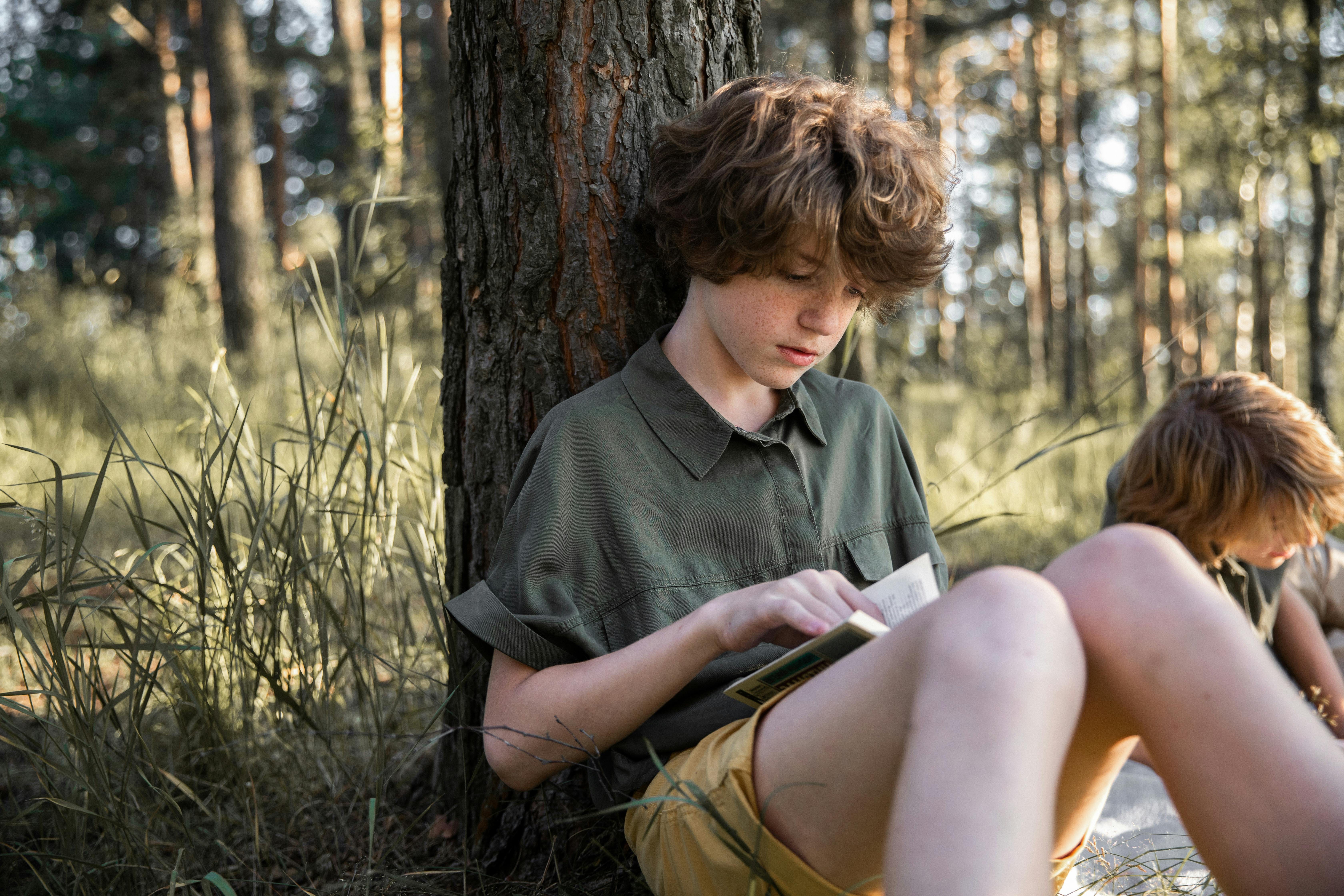
My last Friday post asked for your thoughts on boys and reading, and you guys certainly did not hold back.
First of all, thank you! Genuinely. I’ve spent the last week or so reading through the comments (some of them twice), and it’s been illuminating, and slightly depressing, though strangely hopeful in places too.
Which, to be fair, has been my general research experience over the last 18months, really.
A few big, overarching themes came through loud and clear across the comments. And, this week, rather than the post I was planning, I want to talk about them for a bit.
Firstly, something almost everyone agreed with was that the role model problem for male readers was real.
Multiple of you shared stories of sons, husbands, brothers, and fathers who simply don’t see men reading anymore. And that, most concerningly, boys are watching the men in their lives and seeing that books just aren’t part of the picture.
And this lines up with what the research has been saying for decades. Studies on reading motivation consistently show that boys are more influenced by social norms and perceived masculinity than girls are. So when reading gets coded as “something girls do,” a lot of boys quietly opt out. Not because they can’t read, but because they’ve absorbed the message that it’s not for them. As I mentioned last time, they’ve bought into the propaganda.
The second big theme that came up repeatedly was about what boys are actually being offered in school.
Many of you were pretty blunt here, pointing out that the books on the curriculum, the ones teachers push, and the ones that end up on recommended reading lists are often just not speaking to boys. One of you highlighted that their son’s school reading list was “all feelings and no fighting,” while another mentioned that the only books that ever got their boy interested were the ones with blood, explosions, and terrible decisions.
Now, I’m not saying every book needs to be a blood-soaked power fantasy (though… some of you clearly think that wouldn’t hurt). But the data does back this up.
Research on reading preferences by gender has shown for years that boys tend to gravitate toward stories with high stakes, clear goals, competition, humour, and competent protagonists who actually get out there and do things. So when the only books on offer are quiet, introspective, or heavily focused on emotional processing, it makes sense that a lot of boys check out. It’s not that they can’t do empathy — it’s more that nobody’s given them a reason to care yet, and boys are pretty ruthless about that.
The third theme that came through (and this one didn’t surprise me at all, because this is where I’m at too) was how many of you pointed at traditional publishing itself. Because lots of you pointed out that men are reading. They’re just not reading what traditional publishing is selling.
And the commercial reality is that big publishing has spent the last fifteen years heavily courting female readers (romance, romantasy, book club fiction, and so on) while the male market has largely been left to the indies, the web serials, and self-published authors.
So the problem is real enough, and the causes are complicated, and I suspect the solutions have been hiding in the places the literary establishment doesn’t usually bother looking.
I’d love to hear what you think of all this. Did the themes I pulled out match your own experience? And, most importantly, what do you think we should do about it?
Drop your thoughts below.
And if you want to see what I’m working on while I try to figure all this out, my author website is over at maloryauthor.com — including a free short story if you fancy a quick palate cleanser.
Talk next Friday.