
Using First-Person Narrative Voice
Wednesday Deconstruction. It ain't for everyone.
Hey everyone, and welcome back to another Wednesday Deconstruction!
Last week, we looked at the bait-and-switch chapter end. Making use of a pivot from expected violence into something far more intriguing. This week, we’re going deeper into the foundations of writing by exploring first-person narrative voice.
First-person is one of those techniques that looks easy on the surface (”just write ‘I’ and go for it, my son”) but is actually much trickier than that to pull off. When it works as it should, the reader becomes the lens for the events. They inherit the character’s blind spots, humour, wounds, and all of their verbal tics. When it fails, though, it feels like the author is wearing a slightly ill-fitting skin suit and monologuing at you. At length.
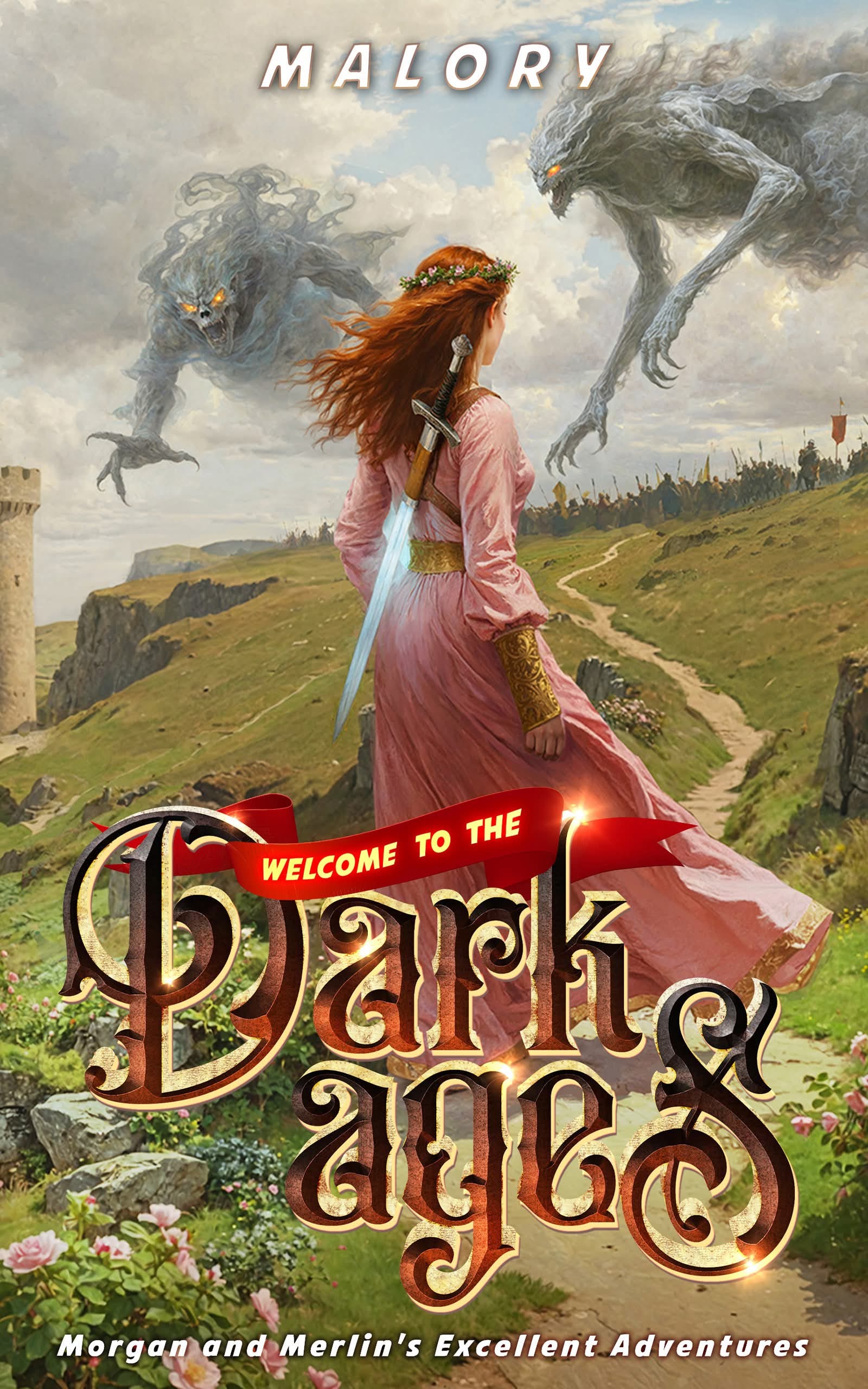
To try to explore what makes it sing, I’ve pulled a snapshot from my ‘Morgan and Merlin’s Excellent Adventures’ series. In this scene, the protagonist is having what might be the least dignified “I think we should see other people” conversation in literary history… with Merlin. Who, in this particular setup, is living rent-free in her head as a cultivation guide.
Here’s the passage:
I think it’s something of a record that I was having the “I think we should see other people” chat with Merlin barely seventy-two hours into our relationship.
I’d had some wild weekends in my youth, but even within that dark context, this was a bit depressing for someone of my age and experience. Mind you, twenty-four of those hours were repeated over and over again . . . So maybe I’m being a bit unfair on myself.
“Mate, I’m not going to lead you on here. The fact is, it’s absolutely you and not me. I need to spend some time with actual people who a) aren’t trying to kill me and b) don’t get their heads blown off by evil wizards within minutes of me meeting them. Also, having a face to talk to in the corporeal world would be peachy.”
As I keep trying to explain, you need to focus…
“Yes, yes, yes. I ‘need’ to focus on my internal journey and advance my cultivation to thwart the great evil casting a shadow across the land. Yada yada yada. Bit of emotional blackmail about my sister. Etc etc. I also ‘need’ someone else I can talk to about this stuff.”
I don’t wish to puncture any illusions you may have here about the plethora of Qi guides in Dark Age Cornwall, but there is no one else who understands this better than me. I am, quite literally, the greatest expert on cultivation in the known — or indeed the unknown — world.
“But you are also the guy that dropped me into single combat with a dragon that killed your last five apprentices. Let’s say I’m having some trust issues.”
And that battle with Vortigern’s Dragon has advanced your cultivation beyond anything that could possibly have been imagined. In a few days, you’ve reached a level of power that should have taken, at the very least, decades of focused study. I do think a little credit where credit is due would not be beyond the pale.
“So now you want the credit for getting me to the cusp of the next level of growth? You’ve been nothing but pissy with me from the second I absorbed that dragon’s Qi. You can’t have it both ways, mate. I’m either nailing this cultivation thing — in which case you can back the fuck off and give me a quick breather to get my head together, or I’m utterly useless, you are needing to do everything for me, and this whole plan is a waste of our time. You can’t double-dip here. And either way, just for the sake of my own sanity I need to talk to someone who isn’t you for a bit.”
We don’t have space for you to have some ‘me time’ here, my dear. I can see in your memories that this is a recurrent theme in your life. Things get hard, and you have a tendency to go missing to ‘find yourself’. But I’m afraid the stakes here are a touch higher here than when you ran away from home because your father took his belt to you…
“Fuck off!”
Now, let’s try unpack exactly why this passage is a good demonstration of first-person voice in action.
Voice does the heavy lifting on character introduction. We learn almost nothing about Morgan’s physical appearance, age, or exact circumstances in the opening lines . The voice itself tells us who she is: sardonic, self-aware, a little damaged, and unimpressed by the epic fantasy mentorship programme she’s been dropped into. The casual “Mate”, the therapy-speak (”I think we should see other people”), the weary aside about repeated hours… all of it arrives fully formed.
Which is what good first-person does, I think — the voice ends up doing the describing for you, so you don’t have to stop and tell the reader who she is.
Internal dialogue becomes external conflict. One of the key moves here is treating the voice-in-the-head as an actual, interruptible argument rather than quiet internal monologue. Merlin’s lines are woven directly into the flow, and Morgan talks back — out loud in her own head. This turns what could have been static exposition (”Merlin kept nagging me about focus…”) into live, escalating conflict. The reader can feel the relationship dynamic in real time. First-person excels at this because the “other” voice is always filtered through the protagonist’s mood, memory, and resistance.
Anachronism and tonal clash as worldbuilding. The setting is all Dark Age Cornwall and dragon Qi and Vortigern, and then Morgan wanders through it saying things like “peachy” and “yada yada yada”, which shouldn’t work but pretty much does.
She says “peachy” about forty feet from a dragon corpse, which tells you a fair amount about how she’s coping, or not coping. She’s an unimpressed person who has been yanked into someone else’s mythic narrative and is processing it with sarcasm and boundary-setting. First-person lets you sell that tonal dissonance without apology. The humour undercuts the stakes without diminishing them, because we experience the cost through the irreverence.
Backstory and trauma emerge through trigger, not info-dump. When Merlin references Morgan running away from home after her father took her belt to her, there’s no flashback or anything like that — she just says “Fuck off!” and the conversation is over.
And honestly that one line probably does more work than a paragraph of backstory would have, because you can feel her slam the door. First-person is exceptionally good at this. Emotional truth leaks out in the moments when the character is most defensive and most unwilling to engage with what just got said.
Humour as coping mechanism beside real stakes. The entire premise (breaking up with your internal cultivation guru 72 hours in) is inherently ridiculous. Yet underneath it sit dead previous apprentices, repeated trauma loops, emotional blackmail about a sister, and the small matter of thwarting “the great evil”.
Through using first-person, a writer lets the humour function as armour. It makes the vulnerability that does leak through feel earned and human. Readers connect because the voice feels like a real person trying (and often failing) to hold it together, rather than a heroic archetype delivering noble internal speeches.
Technical texture that sells authenticity. The ellipses, the self-corrections (”So maybe I’m being a bit unfair on myself”), the direct address, the profanity, and the way thoughts and spoken-to-Merlin lines bleed into each other creates the texture of an actual mind under pressure. The messiness is sort of the point — it reads like a mind under pressure rather than a writer arranging sentences.
So, in a story about internal cultivation, a literal voice-in-your-head mentor, and personal growth under absurd pressure, the use of the first-person narrative voice makes the themes literal. The reader is inside Morgan’s internal journey, arguing with Merlin alongside her. The limitations of the POV (we only ever see Merlin through Morgan’s increasingly frustrated filter) create both intimacy and unreliability.
The question I keep coming back to is whether every sentence sounds like this specific person, and what the voice is hiding, and where the deflection is coming from.
See you next Wednesday.